

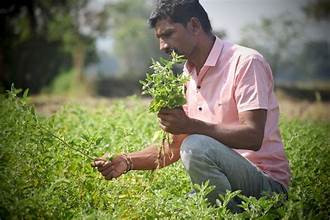
India’s agricultural landscape is witnessing a significant shift as high-value medicinal crops gain popularity among farmers and agribusiness stakeholders. Crops such as Kalmegh and Ashwagandha are experiencing a surge in demand, driven by the rapid growth of the herbal medicine, nutraceutical, and wellness industries both domestically and globally.
The increasing consumer preference for natural and plant-based remedies has created strong market pull for medicinal plants. Ashwagandha, widely recognized for its stress-relieving and immunity-boosting properties, has become a key ingredient in herbal supplements and health products. Similarly, Kalmegh, known for its therapeutic benefits in liver health and immunity enhancement, is being extensively used in Ayurvedic formulations.
To capitalize on this growing demand, agricultural institutions and policymakers are promoting the cultivation of improved and high-yielding varieties of these crops. Research organizations such as Indian Council of Agricultural Research are actively involved in developing superior cultivars that offer better disease resistance, higher active ingredient content, and improved adaptability to different agro-climatic conditions. These advancements are helping farmers achieve higher productivity and better quality produce, which in turn fetches premium prices in the market.
Government support is also playing a crucial role in encouraging farmers to diversify into medicinal crop cultivation. Various schemes and initiatives are being implemented to provide technical guidance, quality planting material, and financial assistance. In addition, contract farming models and buy-back arrangements with pharmaceutical and herbal companies are reducing market risks for growers and ensuring stable income streams.
Experts highlight that medicinal crops require relatively lower input costs compared to conventional crops like wheat or rice, making them an attractive option for small and marginal farmers. Moreover, these crops are often more resilient to climatic stress, which is becoming increasingly important in the face of erratic weather patterns and rising temperatures.
The export potential of medicinal plants is another major driver behind their rising popularity. India, with its rich biodiversity and strong tradition of Ayurveda, holds a competitive advantage in the global herbal market. Demand from countries in Europe, the United States, and Southeast Asia is steadily increasing, particularly for standardized extracts and organic-certified produce.
However, experts caution that farmers need to adopt scientific cultivation practices and maintain quality standards to fully benefit from this opportunity. Proper post-harvest management, drying techniques, and storage are critical to preserving the medicinal properties of these crops. Additionally, access to reliable market information and value chains remains essential for long-term sustainability.
As awareness continues to grow and institutional support strengthens, medicinal crops like Kalmegh and Ashwagandha are emerging as viable alternatives for income diversification. This trend not only enhances farmers’ earnings but also contributes to the expansion of India’s herbal and pharmaceutical sectors, positioning the country as a key player in the global wellness economy.


 By
By











