

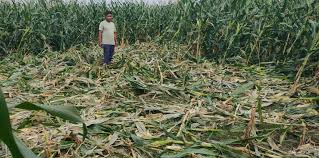
Human-wildlife conflict is emerging as a growing challenge for farmers worldwide, with increasing incidents of crop damage, livestock losses, and property destruction affecting rural communities. As wildlife habitats shrink and agricultural activities expand, encounters between farmers and wild animals are becoming more frequent, prompting governments and conservation agencies to explore new compensation mechanisms and mitigation strategies.
Agricultural experts warn that human-wildlife conflict has become a significant threat to food production and rural livelihoods in many parts of Asia, Africa, and Latin America. Farmers are reporting rising losses caused by elephants, wild boars, monkeys, deer, birds, and large predators that enter agricultural areas in search of food and water.
Crop destruction remains one of the most common forms of conflict. In many regions, wild animals damage standing crops during critical growth stages, reducing yields and affecting farm incomes. Staple crops such as maize, rice, wheat, sugarcane, and vegetables are particularly vulnerable to wildlife raids, often leaving farmers with substantial financial losses.
Livestock producers are also facing growing challenges. Predators such as leopards, lions, wolves, hyenas, and other carnivores frequently attack cattle, sheep, goats, and poultry in areas located near forests and wildlife reserves. These incidents not only affect farm profitability but can also create tensions between local communities and wildlife conservation efforts.
Experts attribute the increase in human-wildlife conflict to several factors, including habitat fragmentation, population growth, climate change, and changing land-use patterns. As forests and natural habitats are converted into agricultural land or urban developments, wildlife is forced to move into human-dominated landscapes. Prolonged droughts and water shortages can further intensify competition for resources.
The economic impact on farmers can be severe, particularly for smallholders who rely heavily on a single crop or limited livestock assets. Repeated losses often discourage agricultural investment and may contribute to rural poverty and food insecurity. In some cases, frustrated communities resort to retaliatory actions against wildlife, creating additional conservation challenges.
To address these concerns, governments in several countries are expanding compensation programs designed to reimburse farmers for verified crop and livestock losses. Such schemes aim to reduce financial burdens on affected households while encouraging coexistence between people and wildlife. However, experts note that compensation systems must be timely, transparent, and adequately funded to remain effective.
Alongside compensation measures, authorities are promoting a range of preventive strategies. These include solar-powered fencing, wildlife barriers, early warning systems, community monitoring networks, and improved livestock enclosures. Farmers are also being encouraged to adopt crop protection methods and land management practices that reduce the likelihood of wildlife encounters.
Technology is increasingly playing a role in conflict mitigation. Drones, motion sensors, GPS tracking systems, and artificial intelligence-based monitoring tools are being used to detect wildlife movements and provide alerts to farmers before animals reach agricultural fields.
Conservationists emphasize that long-term solutions must balance agricultural development with environmental protection. Protecting wildlife corridors, restoring natural habitats, and improving landscape planning can help reduce conflict while supporting biodiversity conservation.
As human populations continue to grow and environmental pressures intensify, experts believe that managing human-wildlife conflict will become an increasingly important component of sustainable agriculture. Effective collaboration between governments, farmers, researchers, and conservation organizations will be essential to protecting both rural livelihoods and wildlife populations in the years ahead.


 By
By











