

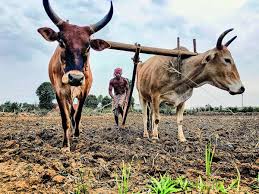
The Government of India has stepped up its preparedness efforts for the 2026 Kharif season by identifying 315 vulnerable districts across the country that could face adverse weather conditions due to monsoon variability and the potential emergence of an El Niño weather pattern. The move is aimed at safeguarding agricultural production and minimizing risks to farmers during the crucial cropping season.
With the southwest monsoon playing a vital role in India’s agricultural output, concerns over uneven rainfall distribution, prolonged dry spells, and extreme weather events have prompted authorities to adopt a proactive approach. The Ministry of Agriculture and Farmers’ Welfare, in coordination with state governments, agricultural universities, and research institutions, has developed comprehensive contingency plans for the identified districts.
These plans focus on ensuring that farmers have access to alternative crop varieties, drought-tolerant seeds, and timely agronomic advisories in the event of rainfall deficits or delayed monsoon conditions. Officials are also encouraging farmers to adopt water-conservation practices and climate-resilient farming techniques to reduce the impact of adverse weather conditions.
The 315 districts have been categorized as vulnerable based on factors such as rainfall dependency, historical drought occurrences, irrigation coverage, soil moisture conditions, and crop sensitivity. Many of these districts are located in rainfed agricultural regions where farming activities depend heavily on monsoon rainfall.
Agriculture experts warn that an El Niño event could affect the distribution and intensity of rainfall across several parts of India. While El Niño does not always lead to drought conditions, it has historically been associated with weaker monsoons and below-normal rainfall in certain regions. Such conditions can adversely affect the sowing and growth of major Kharif crops, including paddy, maize, pulses, soybean, cotton, and groundnut.
To address these challenges, the government has instructed state agriculture departments to maintain adequate stocks of seeds and fertilizers and strengthen extension services. Agricultural scientists are also working closely with local authorities to provide district-specific advisories based on weather forecasts and crop conditions.
In addition, efforts are underway to improve water management through the promotion of rainwater harvesting, efficient irrigation systems, and better utilization of available water resources. Farmers are being encouraged to diversify cropping patterns and adopt short-duration crop varieties where necessary.
The government has also enhanced coordination with meteorological agencies to ensure that weather forecasts and early warning information reach farmers promptly. Digital platforms, mobile applications, and local extension networks are being utilized to disseminate real-time advisories and weather updates.
Experts believe that early planning and timely interventions can significantly reduce crop losses even under challenging weather conditions. The identification of vulnerable districts allows authorities to focus resources and support where they are needed most, helping farmers make informed decisions throughout the season.
As the Kharif sowing season progresses, officials remain optimistic that proactive measures, combined with favorable monsoon performance in many regions, will help maintain agricultural productivity. However, continuous monitoring of weather patterns and field conditions will remain essential to ensuring food security and protecting farmer livelihoods in the months ahead.


 By
By











