

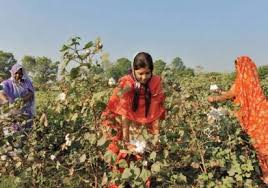
Pakistan’s federal cabinet has approved a new National Agricultural Biotechnology Policy, marking a significant step toward modernizing the country’s agricultural sector and strengthening long-term food security. The policy is designed to promote scientific innovation, improve crop productivity, and support the development of climate-resilient farming systems capable of meeting future food demands.
The approval comes at a time when Pakistan’s agriculture sector faces mounting challenges, including climate change, water scarcity, land degradation, pest outbreaks, and a rapidly growing population. Policymakers believe that biotechnology can play a vital role in addressing these issues by accelerating the development and adoption of improved crop varieties and advanced agricultural technologies.
According to government officials, the new policy provides a comprehensive framework for research, development, regulation, and commercialization of biotechnology-based agricultural innovations. It aims to strengthen collaboration among research institutions, universities, private companies, and farmers to ensure that scientific advancements translate into practical benefits at the farm level.
One of the primary objectives of the policy is to increase crop productivity. Pakistan’s major crops, including wheat, rice, cotton, maize, and sugarcane, are frequently affected by climate-related stresses, diseases, and pest infestations. Biotechnology-based solutions are expected to help develop varieties that offer higher yields, improved resistance to pests and diseases, and greater tolerance to drought and heat.
Food security is another key focus of the initiative. With the country’s population continuing to expand, agricultural production must increase significantly in the coming decades to meet rising demand. Officials believe that modern biotechnology can help close productivity gaps and improve the efficiency of food production systems without requiring substantial expansion of agricultural land.
The policy also emphasizes climate resilience. Scientists are increasingly developing crop varieties capable of performing under extreme weather conditions, including high temperatures, erratic rainfall, and water shortages. Such innovations are expected to help farmers adapt to the growing impacts of climate change while maintaining stable production levels.
Agricultural researchers have welcomed the policy, describing it as an important step toward strengthening Pakistan’s innovation ecosystem. They argue that biotechnology can complement conventional breeding programs and other modern farming practices, enabling faster development of improved crop varieties tailored to local conditions.
The new framework is also expected to encourage investment in agricultural research and development. By providing clearer regulatory guidelines and promoting scientific collaboration, the government hopes to attract both public and private sector participation in biotechnology projects.
However, experts stress that successful implementation will depend on strong regulatory oversight, farmer awareness, and public engagement. Transparent biosafety assessments and science-based decision-making will be essential to building trust and ensuring that new technologies are adopted responsibly.
In addition to biotechnology, agricultural specialists emphasize the need for continued investment in irrigation infrastructure, quality seed systems, extension services, and sustainable farming practices. They note that biotechnology should be integrated into a broader agricultural development strategy rather than viewed as a standalone solution.
As Pakistan moves forward with its National Agricultural Biotechnology Policy, stakeholders across the agricultural sector are optimistic that the initiative will help drive innovation, improve productivity, and strengthen the country’s ability to meet future food security challenges. The policy represents a major milestone in Pakistan’s efforts to build a more resilient, competitive, and technology-driven agricultural economy.


 By
By











