

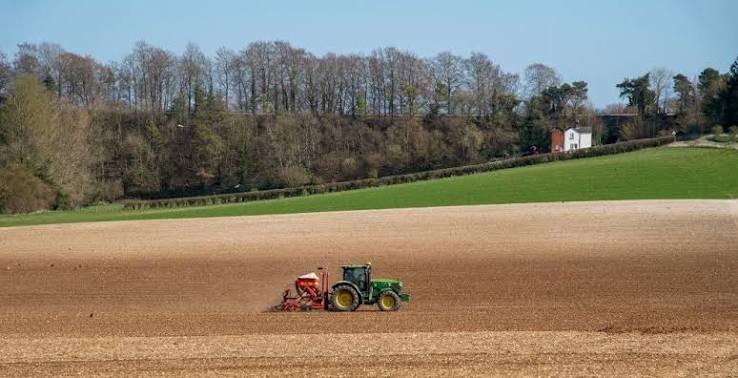
The global agricultural technology (Agri-Tech) sector is witnessing unprecedented investment as venture capital firms, governments, and multinational corporations increase funding for innovative startups working to transform food production and strengthen global food systems. With agriculture facing growing challenges such as climate change, labour shortages, resource scarcity, and rising food demand, investors are viewing Agri-Tech as one of the fastest-growing sectors capable of delivering sustainable and profitable solutions.
Industry analysts report that investments in agricultural startups have expanded significantly over the past few years, driven by rapid advances in artificial intelligence (AI), robotics, biotechnology, precision farming, digital advisory services, and climate-smart agriculture. These technologies are helping farmers produce more food with fewer resources while improving efficiency, reducing environmental impact, and enhancing profitability.
Venture capital firms are increasingly supporting startups developing farm automation systems, precision irrigation technologies, AI-powered crop monitoring platforms, biotechnology solutions, agricultural drones, satellite-based advisory services, autonomous farm machinery, and alternative protein products. Investors believe these innovations have the potential to revolutionize agriculture and make food production more resilient to future challenges.
One of the fastest-growing segments within Agri-Tech is precision agriculture, where startups are using artificial intelligence, machine learning, Internet of Things (IoT) sensors, satellite imagery, and drones to provide farmers with real-time information on crop health, soil moisture, nutrient status, and weather conditions. These digital tools enable farmers to make informed decisions regarding irrigation, fertilization, pest control, and harvesting, leading to higher productivity and lower production costs.
Biotechnology startups are also attracting substantial investment by developing improved crop varieties that offer higher yields, better nutritional quality, enhanced disease resistance, and greater tolerance to drought, heat, and salinity. Such innovations are becoming increasingly important as climate change continues to affect agricultural productivity across many regions of the world.
Automation and agricultural robotics have emerged as another major area of investor interest. Startups are designing autonomous tractors, robotic harvesters, drone sprayers, automated weed management systems, and smart greenhouse technologies that reduce dependence on manual labour while improving operational efficiency. These technologies are helping farmers overcome labour shortages that have become a growing concern in both developed and developing economies.
Digital advisory platforms are transforming access to agricultural knowledge by providing farmers with mobile-based weather forecasts, pest alerts, fertilizer recommendations, crop management advice, market prices, and financial services. Many startups are integrating AI-powered chatbots and multilingual advisory systems that deliver customized recommendations directly to farmers through smartphones, improving decision-making and increasing farm productivity.
The Agri-Tech ecosystem is also witnessing rapid innovation in alternative proteins and sustainable food production. Companies developing plant-based foods, cultured meat, insect protein, and precision fermentation technologies are receiving strong investor support as consumers increasingly seek environmentally sustainable and healthy food alternatives. These innovations are expected to reduce pressure on conventional agriculture while contributing to global food security.
Experts believe Agri-Tech startups are playing a crucial role in solving some of agriculture’s biggest challenges, including declining natural resources, water scarcity, post-harvest losses, inefficient supply chains, climate variability, and changing consumer preferences. By introducing scalable, technology-driven solutions, startups are helping create more resilient and sustainable agricultural systems.
Governments around the world are complementing private investment through supportive policies aimed at encouraging agricultural entrepreneurship. Several countries have established Agri-Tech innovation hubs, startup incubators, accelerator programmes, research parks, and public-private partnerships that provide entrepreneurs with funding, technical mentorship, infrastructure, and access to research institutions.
Universities and agricultural research organizations are increasingly collaborating with startups to accelerate the commercialization of scientific discoveries. Through technology transfer programmes and industry partnerships, research innovations are being transformed into practical products that can be rapidly adopted by farmers and agribusinesses.
Financial institutions are also expanding access to credit and investment for agricultural entrepreneurs, recognizing the sector’s growing importance in achieving food security and sustainable development. International development organizations are supporting Agri-Tech ecosystems through innovation grants, climate finance, and capacity-building initiatives that encourage technology adoption among smallholder farmers.
Agricultural economists believe that greater collaboration between farmers, researchers, investors, governments, and technology companies will be essential for maximizing the impact of Agri-Tech innovations. Building robust digital infrastructure, improving rural connectivity, strengthening startup ecosystems, and enhancing farmer training will further accelerate the adoption of modern agricultural technologies.
Industry observers expect the global Agri-Tech market to continue expanding over the coming decade as investment in sustainable agriculture, digital farming, biotechnology, and climate-resilient food systems increases. With continuous innovation and supportive policy frameworks, Agri-Tech startups are expected to play a transformative role in modernizing agriculture, improving farmer incomes, reducing environmental impacts, and ensuring global food security for a rapidly growing population.


 By
By











