

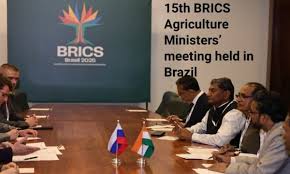
Agriculture ministers, policymakers, and industry leaders from BRICS+ member countries have renewed calls for stronger agricultural cooperation as nations seek to enhance food security, expand agricultural trade, and build more resilient food systems in the face of growing global challenges.
The BRICS+ grouping, which includes major emerging economies from different regions of the world, represents a significant share of global agricultural production, trade, and consumption. With increasing concerns over climate change, supply chain disruptions, food inflation, and geopolitical uncertainties, member countries are highlighting the importance of closer collaboration to ensure stable and sustainable food supplies.
Officials participating in recent discussions emphasized that cooperation among BRICS+ nations can play a crucial role in addressing common agricultural challenges. Key areas of focus include improving access to agricultural technologies, promoting innovation, enhancing research partnerships, and facilitating the exchange of best farming practices.
Agriculture remains a cornerstone of economic development and rural livelihoods across many BRICS+ countries. Collectively, the bloc accounts for a substantial portion of the world’s production of grains, oilseeds, fruits, vegetables, livestock products, and other agricultural commodities. Strengthening collaboration could help member nations improve productivity while reducing vulnerabilities to external shocks.
Food security has emerged as a central theme in policy discussions. Leaders stressed the need to develop more resilient food systems capable of withstanding climate-related disruptions, extreme weather events, and market volatility. Investments in climate-smart agriculture, water-efficient farming techniques, and sustainable production systems were identified as critical priorities for the future.
Trade cooperation is also receiving increased attention. Policymakers believe that expanding agricultural trade among BRICS+ countries can help stabilize food supplies, create new market opportunities for farmers, and reduce dependence on traditional trade routes. Efforts are underway to explore mechanisms that simplify trade procedures, improve logistics networks, and strengthen market access for agricultural products.
Research and innovation were highlighted as key drivers of long-term agricultural growth. Member nations are encouraging greater collaboration among universities, research institutions, and agricultural organizations to develop improved crop varieties, precision farming technologies, and sustainable production methods. Sharing scientific expertise is expected to help farmers adapt more effectively to changing environmental conditions.
The discussions also focused on supporting smallholder farmers, who form the backbone of agricultural production in many developing economies. Enhanced access to technology, financial services, extension support, and digital agriculture solutions could help improve farm productivity and rural incomes across participating countries.
Experts note that stronger agricultural partnerships within the BRICS+ framework could have benefits beyond member nations. As major contributors to global food production, coordinated efforts to improve productivity and strengthen supply chains could support broader international food security objectives.
As global agriculture faces increasing pressure from population growth, climate uncertainty, and resource constraints, BRICS+ countries are positioning agricultural cooperation as a strategic priority. By expanding collaboration in trade, technology, research, and sustainable farming, the bloc aims to build stronger food systems capable of supporting economic growth and ensuring food security for future generations.


 By
By











