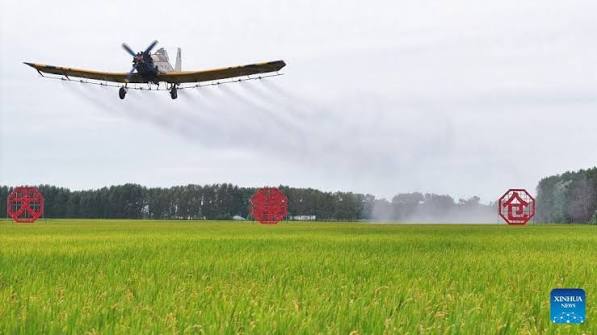
China has stepped up the use of aerial agricultural technology to protect its autumn crops, deploying fixed-wing agricultural aircraft, helicopters and plant-protection drones across Heilongjiang Province. The initiative reflects the country’s growing reliance on large-scale mechanized and precision technologies to safeguard crops, improve pest and disease management, and support stable agricultural production.
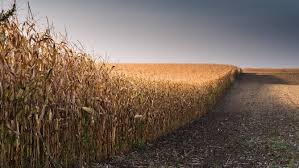
Heilongjiang, one of China’s most important agricultural regions, is known for its vast areas of farmland and major contribution to the country’s grain supply. During the autumn crop season, farmers face risks from crop diseases, insect pests and changing weather conditions. Aerial crop-protection operations are being used to cover large farming areas quickly and efficiently.
The deployment of fixed-wing agricultural aircraft provides an advantage in treating extensive farmland within a relatively short period. These aircraft can cover large areas and distribute crop-protection products over fields that would otherwise require significant time and manpower to treat using conventional ground-based equipment.
Helicopters are also being utilized for agricultural operations, particularly in areas where flexible aerial application is required. Their ability to operate at relatively low altitudes allows operators to target crop fields more precisely while responding to localized pest and disease threats.
At the same time, plant-protection drones are becoming an increasingly important part of China’s modern agricultural system. Equipped with precision spraying technology, drones can apply crop-protection products over targeted areas while reducing the need for farmers and workers to enter fields manually. Their ability to operate across different field conditions also makes them useful for timely pest-control operations.
The growing use of drones and aircraft is part of a broader trend toward smart agriculture and agricultural mechanization in China. Digital technologies, remote sensing, satellite-based monitoring and unmanned aerial systems are increasingly being combined to improve the efficiency of farming operations.
For farmers, timely crop protection can be critical during the later stages of crop development. Large-scale aerial operations can help authorities and agricultural service providers respond rapidly when pest or disease outbreaks are detected. This is particularly valuable in regions such as Heilongjiang, where agricultural production is carried out across very large areas.
The development also highlights how agricultural aviation is evolving from a specialized service into an important component of modern crop management. Instead of relying solely on conventional spraying methods, farmers can increasingly use aerial platforms to complement field-level machinery and other precision-farming technologies.
China’s latest efforts in Heilongjiang demonstrate the potential of combining aircraft, helicopters and drones to strengthen crop protection at scale. As agricultural technology continues to advance, aerial systems are expected to play a greater role in improving operational efficiency, reducing response times and helping protect food production.
The deployment of these technologies during the autumn crop season therefore represents another step toward more efficient, technology-driven and large-scale agricultural management, while demonstrating the growing importance of unmanned and aerial systems in modern farming.

 By
By