

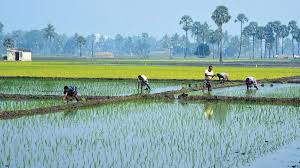
In a significant shift toward sustainable agriculture, India is accelerating the expansion of natural farming training programs to help farmers reduce dependency on costly chemical inputs and adapt to growing climate challenges. The initiative is gaining momentum across multiple states, with a strong focus on capacity building, field demonstrations, and farmer-to-farmer knowledge transfer.
Natural farming, which emphasizes the use of locally available resources such as cow-based inputs, crop residues, and bio-formulations, is being promoted as a low-cost and eco-friendly alternative to conventional farming. By minimizing the use of synthetic fertilizers and pesticides, the approach not only reduces input expenses but also improves soil health and biodiversity over time.
Government agencies and agricultural institutions are actively organizing training camps, workshops, and on-field sessions to educate farmers about natural farming techniques. These programs typically cover key practices such as seed treatment with bio-inputs, preparation of natural fertilizers like Jeevamrit, and pest management using botanical extracts. Farmers are also being trained in crop diversification and mixed farming systems, which enhance resilience against climate variability.
One of the primary drivers behind this push is the rising cost of agricultural inputs, including fertilizers and pesticides, which has been putting financial pressure on farmers. Natural farming offers a viable solution by significantly lowering production costs while maintaining sustainable yields over the long term. This is particularly beneficial for small and marginal farmers who often struggle with limited financial resources.
Climate change is another critical factor influencing this transition. Erratic rainfall patterns, increasing temperatures, and soil degradation have made traditional farming practices more vulnerable. Natural farming methods, which improve soil organic matter and water retention, help farms better withstand such stresses. As a result, crops become more resilient to droughts and extreme weather conditions.
Several state governments are integrating natural farming into their agricultural policies, offering incentives and technical support to encourage adoption. Pilot projects and cluster-based approaches are being implemented to create model villages that demonstrate the effectiveness of these methods. Success stories from early adopters are further motivating other farmers to transition toward sustainable practices.
Experts, however, point out that while natural farming holds long-term benefits, its success depends on proper training, continuous support, and market linkages for organic or chemical-free produce. Ensuring that farmers receive fair prices for their output will be essential to sustain interest and adoption.
The expansion of natural farming programs aligns with India’s broader vision of promoting sustainable and climate-resilient agriculture. By empowering farmers with knowledge and low-cost solutions, the initiative aims to create a more self-reliant farming system that balances productivity with environmental conservation.
As these training efforts scale up, natural farming is poised to play a crucial role in transforming Indian agriculture—reducing costs, protecting natural resources, and securing the future of farming in an era of climate uncertainty.


 By
By











