

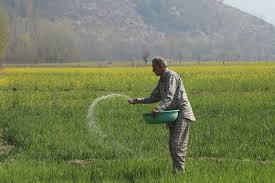
A growing fertilizer crisis across India and other parts of South Asia is raising serious concerns about food security, as global supply disruptions continue to affect the availability and affordability of key agricultural inputs. Farmers across the region are facing difficulties in accessing essential fertilizers, a situation that could lead to reduced crop yields and heightened risk of a food crisis in the coming seasons.
The shortage is largely driven by disruptions in international supply chains, rising energy costs, and geopolitical tensions that have affected the production and export of fertilizers worldwide. Countries in South Asia, many of which rely heavily on imports for fertilizers such as urea, diammonium phosphate (DAP), and potash, are particularly vulnerable to these global shocks.
In India, the situation is becoming increasingly critical as the demand for fertilizers peaks during key sowing seasons. Limited availability and rising prices are forcing farmers to either delay application or use lower quantities than recommended. Agricultural experts warn that insufficient fertilizer use can significantly impact crop productivity, especially for staple crops like rice, wheat, and pulses.
The impact is not limited to India alone. Neighboring countries across South Asia are also grappling with similar challenges, leading to regional concerns over food supply stability. In countries where smallholder farmers dominate, even minor disruptions in input availability can have large-scale consequences for food production and rural livelihoods.
The fertilizer crisis is also contributing to rising input costs, further straining farmers’ financial capacity. While governments in the region have attempted to cushion the impact through subsidies and price controls, the scale of the global disruption is making it difficult to fully stabilize the market.
Experts emphasize that a prolonged shortage could lead to a decline in agricultural output, tightening food supplies and driving up prices. This, in turn, may increase food inflation and reduce access to affordable food, particularly for vulnerable populations.
To address the crisis, policymakers are exploring multiple strategies, including securing alternative import sources, boosting domestic fertilizer production, and promoting efficient usage through balanced nutrient management. There is also a growing push toward adopting organic and bio-fertilizers as partial substitutes, although scaling these alternatives remains a challenge.
The situation highlights the fragile nature of global agricultural supply chains and the heavy dependence of many countries on imported inputs. It also underscores the need for long-term resilience strategies, such as diversifying supply sources and investing in sustainable farming practices.
As the sowing season progresses, the availability of fertilizers will play a decisive role in determining crop output across the region. Any significant disruption could have far-reaching implications, not only for farmers but also for food prices and overall economic stability in South Asia.


 By
By











