

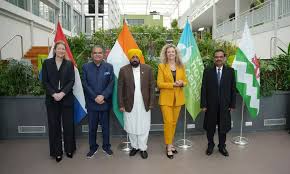
In a forward-looking move to modernize its agricultural sector, Punjab is planning to adopt advanced farming practices inspired by the Netherlands—a global leader in high-efficiency, technology-driven agriculture. The initiative aims to boost productivity, optimize resource use, and enhance farmers’ incomes through the integration of greenhouse cultivation, artificial intelligence (AI), and precision farming techniques.
Punjab, often referred to as India’s “grain bowl,” has long relied on traditional cropping patterns dominated by wheat and paddy. However, challenges such as declining soil fertility, groundwater depletion, and rising input costs have prompted policymakers to explore sustainable alternatives. The Dutch farming model, known for its high yields on limited land and minimal resource consumption, offers a viable roadmap for this transition.
A key focus of the plan is greenhouse and protected cultivation. By shifting a portion of farming activities into controlled environments, farmers can grow high-value crops such as vegetables, flowers, and exotic fruits throughout the year. This approach not only increases yield per hectare but also reduces dependency on unpredictable weather conditions.
Another major component is the adoption of AI-driven advisory systems. These technologies can analyze real-time data related to soil health, weather patterns, and crop conditions to provide precise recommendations on irrigation, fertilization, and pest control. Such data-driven decision-making helps in reducing input wastage while maximizing output.
Precision agriculture tools, including sensors, drones, and GPS-based monitoring systems, are also expected to play a central role. These technologies enable farmers to apply water, fertilizers, and pesticides in exact quantities required by crops, improving efficiency and minimizing environmental impact.
The inspiration from the Netherlands is particularly significant because the country has emerged as one of the world’s top agricultural exporters despite its small geographical size. By leveraging innovation, research, and strong agri-infrastructure, the Netherlands has demonstrated how high productivity can be achieved sustainably.
Punjab’s proposed transformation is likely to involve collaborations with Dutch experts, research institutions, and agri-tech companies. Training programs and pilot projects may be launched to familiarize farmers with new technologies and practices. The government is also expected to provide financial support and subsidies to encourage adoption, especially among small and medium-scale farmers.
Experts believe that this shift could help Punjab diversify its agriculture, reduce over-reliance on water-intensive crops, and create new income streams for farmers. Additionally, it aligns with India’s broader vision of promoting sustainable and climate-resilient agriculture.
However, the success of this initiative will depend on effective implementation, farmer awareness, and infrastructure development. High initial investment costs and the need for technical expertise could pose challenges, particularly in rural areas. If executed well, Punjab’s adoption of the Dutch farming model could serve as a benchmark for other states in India, signaling a new era of smart, efficient, and sustainable agriculture


 By
By











