

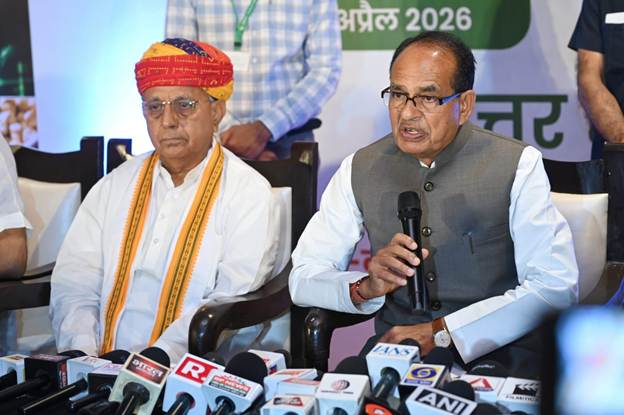
The Northern Regional Agriculture Conference held in Lucknow has emerged as a key platform for outlining India’s future agricultural roadmap, with a strong emphasis on small farmers, crop diversification, and self-reliance. Addressing a press conference during the event, Union Minister for Agriculture & Farmers Welfare and Rural Development Shivraj Singh Chouhan presented a comprehensive vision for reshaping the country’s agricultural policies.
The minister made it clear that India is moving away from a “one-size-fits-all” approach to agriculture. Instead, future policies will be tailored according to regional factors such as climate conditions, water availability, soil health, and cropping patterns. The conference is being seen as a significant step toward designing region-specific strategies that directly address farmers’ needs and challenges.
Chouhan highlighted that the government has divided the country into five regions and initiated a series of regional agricultural conferences, with Lucknow hosting the second such event. The objective is to collaborate with states to prepare effective strategies for Kharif and Rabi seasons, while also addressing core issues impacting productivity and farmers’ income.
He acknowledged India’s achievements in foodgrain production, noting that the country has reached a strong global position in wheat and rice output, even permitting the export of 5 million metric tonnes of wheat. However, he emphasized that achieving self-reliance in pulses and oilseeds remains a major challenge. The government’s broader goal, he said, is to ensure food security, enhance farmers’ income, and provide nutritious food to citizens.
To drive agricultural growth, the government has identified six key pillars: increasing production, reducing input costs, ensuring fair prices, compensating crop losses, promoting diversification, and strengthening market linkages. Chouhan stressed that reliance on traditional wheat-paddy systems is no longer sufficient, and called for expansion into horticulture, fruits and vegetables, food processing, and value addition.
Focusing on small and marginal farmers, the minister advocated for integrated farming systems as a sustainable solution. Models such as intercropping, livestock rearing, fisheries, beekeeping, and agroforestry can help farmers generate multiple income streams from limited land holdings. The central government is actively sharing such models with states for localized implementation.
On financial inclusion, Chouhan noted that many farmers still lack access to affordable credit. The government is running special campaigns to ensure wider coverage under the Kisan Credit Card (KCC) scheme, enabling farmers to invest in quality seeds, fertilizers, and modern technologies.
He also highlighted the importance of the Farmer ID initiative, calling it a transformative reform in the agriculture sector. By digitizing farmers’ land records, livestock details, and other data on a single platform, the system will ensure faster and more transparent delivery of government benefits. Millions of Farmer IDs have already been created across the country.
The minister further elaborated on the “Lab to Land” initiative, which aims to bridge the gap between scientific research and on-field practices. Scientists and experts will directly engage with farmers at the village level, helping them adopt improved seeds, advanced technologies, and scientific farming methods.
Referring to Uttar Pradesh, Chouhan announced relief measures for potato farmers, including approval for the procurement of 2 million metric tonnes of potatoes. Plans are also underway to establish an international processing center in the state, which is expected to improve market access and price realization for farmers.
On fertilizer pricing, he assured that the burden of global price fluctuations will not be passed on to farmers. Under the leadership of Prime Minister Narendra Modi, the government has approved an additional subsidy of ₹41,000 crore to keep urea and DAP affordable.
The minister also took a firm stance against counterfeit seeds and pesticides, stating that stricter provisions are being planned under the Seed Act and Pesticide Act to protect farmers from fraud.
Promoting natural farming, he said the government is supporting farmers during the transition phase with financial assistance. This approach is crucial not only for soil health but also for ensuring long-term sustainability and human well-being.
Overall, the Lucknow conference is being viewed as a pivotal moment in redefining India’s agricultural strategy making it more resilient, diversified, and farmer-centric for the future.


 By
By











