• Home
  • AGRI GOVT STORY
  • Global Supply Chain Pressures Intensify as Iran War Disrupts Food and Fertilizer Flows
Image

Global Supply Chain Pressures Intensify as Iran War Disrupts Food and Fertilizer Flows

Continuing conflict involving Iran is increasingly straining key agricultural supply chains and raising the risk of higher food inflation, according to multiple trade and economic analyses. Disruptions around the Strait of Hormuz, a vital maritime route for energy, fertilizer, and other commodities, have constrained shipments and elevated input costs for farmers and food producers worldwide.

The Strait of Hormuz carries a large share of internationally traded fertilizers—including nitrogen, phosphate, and urea—along with significant volumes of oil and liquefied natural gas (LNG), which are essential feedstocks for fertilizer production. The near-halt of maritime traffic through the strait due to the conflict has tightened supply, pushed prices higher, and heightened logistical costs for global markets.

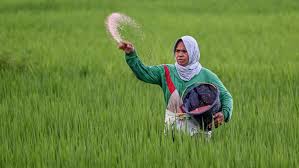
Market data show that fertilizer prices have climbed sharply, prompting some producers to reassess planting plans for the upcoming growing season. With fertilizer accounting for a substantial portion of crop production costs, elevated input prices could reduce application rates or shift crop choices toward less fertilizer-intensive varieties, potentially affecting yields of staple commodities like corn, wheat, and rice.

The disruption is occurring against a backdrop of broader inflationary pressures in energy and transport markets. Higher fuel costs and shipping delays are feeding through to food-related expenses, adding to concerns over rising global food prices that had only recently begun to stabilize from previous shocks.

Economists and supply-chain experts warn that the compounded impacts of geopolitical instability could have far-reaching consequences. Developing countries—many of which rely heavily on imported fertilizer and food commodities—are particularly vulnerable to price surges and supply constraints, which could reverse gains in food affordability and security.

While energy and agricultural markets continue to adjust to the evolving situation, policymakers and industry stakeholders are closely monitoring developments, with intensified calls for diversification of supply routes, enhanced storage strategies, and policy measures to mitigate inflationary risks for consumers and producers alike.


Releated Posts

Report Flags Heavy Agriculture Lobbyist Presence at COP30, Raising Concerns Over Policy Influence

New investigative findings reveal that more than 300 lobbyists representing industrial agriculture interests were present at the COP30…

ByByadmin Mar 25, 2026

U.S. Agriculture Reassesses Trade Strategy as Focus on India and China Intensifies

The United States is placing renewed emphasis on agricultural trade relationships with India and China, a shift that…

ByByadmin Mar 25, 2026

China’s Flower Industry Booms Amid Rising Demand and Expanding Agricultural Diversification

China’s flower economy is experiencing a significant surge, according to new reporting from Xinhua, highlighting strong domestic demand…

ByByadmin Mar 25, 2026

Geopolitical Tensions Threaten Global Fertilizer Supply Chain, Raising Risks for Food Production

Escalating geopolitical tensions in the Middle East—particularly disruptions surrounding the strategically vital Strait of Hormuz—are exerting mounting pressure…

ByByadmin Mar 25, 2026

New Study Warns of Rising Crop Dominance Threatening Global Agricultural Sustainability

A newly released research analysis has raised alarms over the growing dominance of a small number of crop…

ByByadmin Mar 25, 2026

SAP and Syngenta Announce Multiyear Partnership to Scale AI-Driven Agriculture Solutions Worldwide

Technology giant SAP and global agri-innovation leader Syngenta have launched a major multiyear strategic collaboration aimed at accelerating…

ByByadmin Mar 25, 2026

International AI-ENGAGE Awards Launched to Accelerate Next-Generation Farming Innovation

The U.S. National Science Foundation (NSF) has announced the inaugural cohort of AI-ENGAGE Awards, a landmark $2.4 million…

ByByadmin Mar 25, 2026

AI Adoption for Smallholder Farms Accelerates in India and Emerging Markets

Efforts to bring artificial intelligence to smallholder agriculture are gaining momentum as ag-tech firms, research institutions, and digital…

ByByadmin Mar 24, 2026

U.S. National Science Foundation Launches AI-Focused Agriculture Research Funding Initiative

The U.S. National Science Foundation (NSF) has announced $2.4 million in new AI-ENGAGE awards to accelerate artificial intelligence…

ByByadmin Mar 24, 2026

Leave a Reply

Your email address will not be published. Required fields are marked *

error: Content is protected !!
Scroll to Top












