

Disruptions in global gas supplies affecting fertilizer production have raised concerns about the stability of agricultural supply chains and food security worldwide. According to industry experts, the situation highlights the urgent need to strengthen resilience in agriculture through advanced technology and innovation.
Commenting on the issue, Vivek Raj, Founder and CEO of Panama Corporation, said that the current disruption in gas supplies—an essential input for urea manufacturing—demonstrates how closely global food systems are linked with energy markets and geopolitical developments.
He noted that when fertilizer plants operate at reduced capacity, sometimes as low as 60 percent, the consequences ripple throughout the agricultural value chain. Lower fertilizer production can affect crop productivity, influence food prices and eventually impact households across the world.
Vivek Raj emphasized that such situations highlight the vulnerability of traditional agricultural systems to external shocks. He stressed the importance of building greater resilience in the sector so that farmers and food supply chains are better protected against global disruptions.
According to him, technology can play a crucial role in addressing these challenges. The development of a robust agricultural technology ecosystem—often referred to as an “agri-tech stack”—can help improve productivity while reducing dependence on volatile inputs.
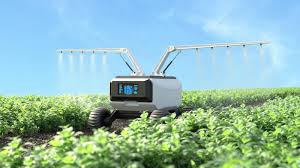
He pointed out that emerging solutions such as artificial intelligence-based precision farming and controlled-environment agriculture are already demonstrating the potential to optimise resource use while maintaining stable crop yields. These technologies enable farmers to use inputs more efficiently and make informed decisions based on real-time data.
For a country like India, where agriculture supports millions of livelihoods and remains central to economic stability, investing in technology-driven farming systems is increasingly important. Experts believe that integrating data analytics, artificial intelligence and advanced farming practices can help make agricultural production more predictable and resilient.
Raj further stated that building an agricultural intelligence layer that connects data, AI and modern farming technologies could significantly reduce the vulnerability of food systems to global supply chain disruptions. Such a framework would help farmers make better decisions, stabilize markets and improve long-term food security.
Industry observers believe that strengthening digital agriculture and encouraging innovation will be key to ensuring sustainable growth in the sector, especially in an era where climate change, geopolitical tensions and supply chain disruptions are increasingly affecting global food systems.


 By
By











