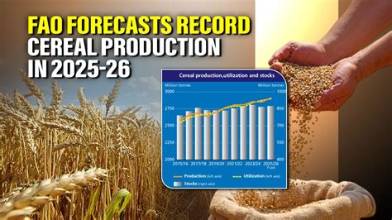
Global cereal production is forecast to reach approximately 2.979 billion tonnes in 2026, representing a 2.1% decline from the record harvest achieved in 2025. Despite the expected reduction, global output would remain the second-highest on record, according to the Food and Agriculture Organization of the United Nations (FAO).
The outlook highlights the resilience of global agricultural production while underscoring growing risks from unfavorable weather, regional supply constraints and disruptions to international grain transportation. Wheat production prospects have improved in Australia, but lower expectations for coarse grains and rice have offset much of that improvement.
For farmers, grain traders, food processors and importing countries, the forecast is an important indicator of the potential balance between global cereal supplies and demand during the 2026/27 marketing season.
Wheat Outlook Improves as Coarse-Grain Prospects Weaken
FAO has raised its forecast for global wheat production by 3.2 million tonnes to 813.9 million tonnes for 2026. However, this would still represent a 3.3% decline compared with the previous year.
The improvement is largely attributed to better-than-expected weather conditions in Australia during July and August, which strengthened yield expectations. Nevertheless, the country’s wheat yields are still projected to remain below average, and the possibility of below-normal rainfall towards the end of the growing season remains a concern.
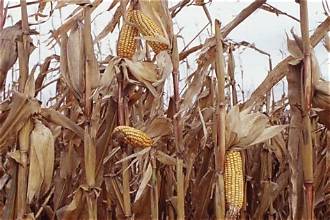
In contrast, global coarse-grain production is forecast at 1.612 billion tonnes, down 1.3% year-on-year. Reduced maize production prospects in the European Union and the United States, where hot and dry weather has affected yield potential, account for much of the downward revision. Improved rainfall in Australia has supported barley production prospects, partially offsetting the decline.
Rice Production Faces Weather-Related Challenges
Global rice production for the 2026/27 season is forecast at 552.5 million tonnes on a milled basis, approximately 2.4% below the record level of the previous season.
FAO has lowered its outlook for rice production in India, citing reduced main-crop planting and poorly distributed monsoon rainfall that has tightened irrigation water supplies in southern producing states. Improved production prospects in Japan and Nepal have provided some support but have not fully offset the reductions elsewhere.
Asia is expected to account for a substantial share of the anticipated decline in global rice production. These developments make rainfall patterns, irrigation availability and the performance of major rice-producing countries important factors for international rice markets.
Global Cereal Demand and Stocks
Despite lower production, global cereal utilization is forecast to reach 2.966 billion tonnes in the 2026/27 season, an increase of approximately 0.1% from 2025/26. Higher expected consumption of coarse grains and rice is projected to offset a decline in wheat utilization.
Global cereal stocks at the close of the 2026/27 marketing seasons are forecast at 950 million tonnes. This would leave inventories broadly unchanged from opening levels. However, the global cereal stocks-to-use ratio is expected to decline slightly from 32.0% to 31.7%, indicating a modest tightening in the overall supply-demand balance.
International Grain Trade Expected to Decline
FAO projects global cereal trade at 505.8 million tonnes in the 2026/27 marketing season, a decrease of 3.5% from the previous season’s record level.
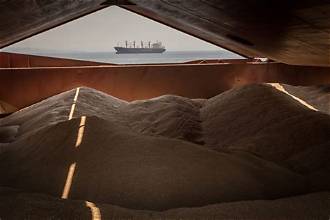
Lower wheat and barley shipments are expected to outweigh increases in maize and rice trade. Constraints affecting Black Sea shipping routes and limited alternative transportation capacity have contributed to downward revisions in projected wheat and maize exports.
Higher freight rates, fertilizer costs and logistical disruptions could further influence grain procurement decisions and increase uncertainty for international buyers. Import-dependent countries may face additional challenges in securing supplies at affordable prices.
Outlook for Farmers and Food Security
The forecast suggests that global cereal supplies will remain substantial despite the expected year-on-year production decline. However, regional shortages, weather-related crop losses and transportation disruptions could create uneven market conditions.
Farmers will need to monitor local weather forecasts, manage production costs and make informed decisions about planting, irrigation and fertilizer use. Governments and agricultural agencies can support these efforts through timely market information, improved storage infrastructure and measures that maintain efficient trade flows.
Conclusion: The projected 2.979-billion-tonne cereal harvest demonstrates the continuing strength of global agricultural production. Nevertheless, lower output, declining trade volumes and weather uncertainty underline the importance of resilient farming systems and reliable international supply chains.

 By